
Project costs
Frequently Asked Questions
We’ve engineered our project for maximum scalability. Our technology adapts to any budget, from home-garden prototypes to large-scale community systems.
What are the costs to run this project?
However, our ultimate goal is to move beyond the garden. Our Farm of the Future concept integrates climate-proof infrastructure with next-generation farming techniques. This is a 100% circular, self-sustaining model built to ensure food security in an unpredictable world.

pROTOTYPe: home
To realize one ‘home’ prototype
Measurements: 4m wide x 12m length
Tanksize: 9000 liters
Total surface: 48m2
Total costs: 800 euro

pROTOTYPe: Community
To realize one ‘Community’ prototype
Measurements: 24m wide x 32m length
Tanksize: 72000 liters
Total surface: 768m2
Total costs: 7.000 euro
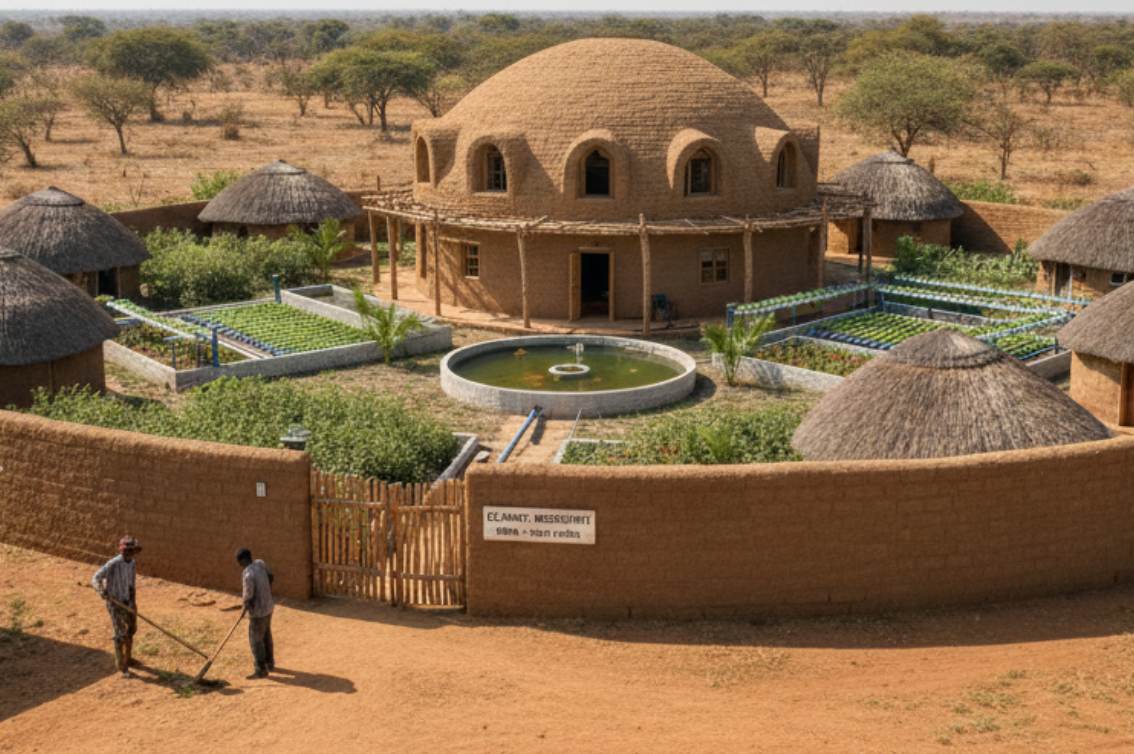
pROTOTYPe: future farm
To realize the prototype of the farm of the future including fish & plant nursery, watertanks, a SDF farm and the large prototype of our community grow system.
Total costs: 50.000 euro
The cheapest and most climate resilent farm of the world
This farm is, without a doubt, one of the cheapest you can imagine. But what makes it so affordable? How is this even possible?
An ultra-low-cost building method
The key lies in how we construct our buildings. We use sand as the primary material—and since we’re located in a sand mine, it’s completely free. Of course, we still need to purchase items like sandbags, barbed wire, windows, and doors, but these costs are minimal. Depending on the size, a small earthbag house can be built for under €1,000. We also use this same earthbag building technique to construct walls, fish tanks, and water storage systems. The result is a method that is sustainable, durable, and incredibly cost-effective.

Pond liner (also known as pond foil) is an essential material for building our sandponics field, developing prototypes, and creating the irrigation stream that runs throughout the farm. It is one of the most costly resources we rely on, aside from solar energy.


This farm is, without a doubt, one of the most cost-efficient you can imagine. It is intentionally large, as this pilot project aims to test a variety of prototypes. The farm will serve to provide food for the village of Kartong, while also educating young people and introducing them to this innovative approach to farming.
Overview of costs
| Creek irrigation system | € 6.000 |
| Pump + solar system | € 1.800 |
| Wall / Fencing | € 6.000 |
| Main Building | € 6.000 |
| Black Soldier Fly Farm | € 1.500 |
| Fish Nursery | € 3.000 |
| Plant Nursery | € 2.000 |
| Watertanks | € 3.000 |
| Fish Nursery | € 6.000 |
| Sandponics field | € 5.000 |
| 7x Prototype small | € 5.600 |
| 2x Prototype large | € 14.000 |
| 2x Biogas system | € 4.000 |
| Staff / security building | € 6.000 |
| Storage buildings | € 1.800 |
| Totaal | € 64.000 |
Small Input, Massive Output
The total cost to realize this pilot project is approximately €64,000. While this is a significant investment, the expected impact makes it well worth every euro. First, the project aims to inspire young people to remain in The Gambia by showing that farming can be both innovative and financially rewarding. Second, it will create a range of employment opportunities. Participants will be trained to set up and manage a Soldier Fly farm, operate a fish nursery, and most importantly, work with the aqua-/sandponics growing system.
This farm has the potential to mark the beginning of a transformation in agriculture in The Gambia. The fish and plant nurseries will supply young fish and seedlings to farmers who want to adopt this system, helping it spread across the region.
Finally, the farm will produce a substantial amount of food, including fish, Guinea fowl, rice, and vegetables. This will play a key role in strengthening food security for the village of Kartong.