
pilot project
Let's build the farm of the future
The aim of this project is to demonstrate a different—and far more effective—way of farming. To achieve this, we will build the “farm of the future.” Through this pilot project, we plan to develop a working farm where our different prototypes can be tested, refined, and optimized. This site will not only serve as a production farm, but also as a nursery for growing fish and plants. In addition, it will function as a learning center where young people and farmers across The Gambia can be trained in this revolutionary farming technique.
meet the farm that is 100% climate-change proof
How climate-change is affecting farmers in the Gambia
The reason we call this the ‘Farm of the Future’ is because everything is different on this farm. Not only is our way of farming resilent to climate-change. Also our way of building is different. Instead of the usual way of building, we will use earthbag building as our way to eastablish our buildings. This way of building is not only super climate-change proof, but also really cheap.
What we have done in our concept is basically mixing aquaponics with sandponics techniques to create a farm/gardening system. The method of so called ‘Adobe building’ will be used to create builings that can withstand every storm, fire, earthquake or flood.
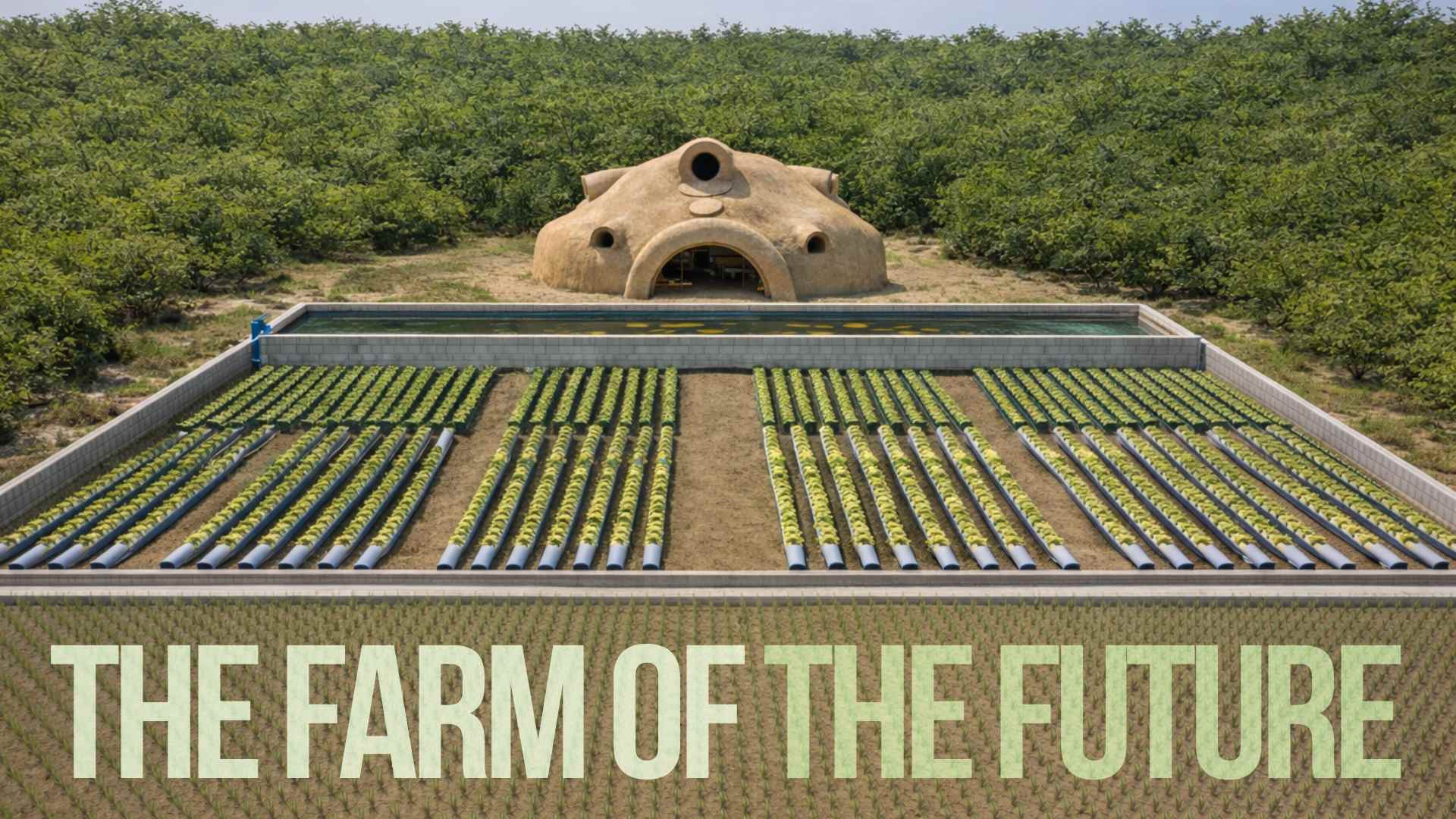

all elements together in one space
How climate-change is affecting farmers in the Gambia
The same applies to plant production. A plant nursery is essential, as all crops must be prepared—germinated and pre-grown into young plants—before being transferred to the grow tubes.
To operate effectively, the project requires several core facilities. These include a dedicated workspace for manufacturing grow pipes and other system components, a cool storage area for temporary harvest storage and a materials storage facility.
Together, these facilities form the foundation of a functional and scalable operation. By establishing fish and plant nurseries, we can supply young plants & plants to local households interested in starting their own aqua- or sandponics systems. The workspace further enables us to produce grow pipes and essential components for our farm.
All these facilities can be build very cheap by building adobe buildings. Even the fishtanks can be build by using this technique.
lET'S CONVERT AN OLD SANDMINE TO FARM OF THE FUTURE
Our aim is tranform a abondoned sand mine into the farm of the future with a small budget. We aim to show local youths that this way of farming is different, and could mean a great income. This way we want to inspire local people to get into this new way of farming.

Project Map
How deforestation is affecting ground water levels
This image shows a map of the pilot project. Rainwater harvesting will supply the system with water, which will be stored in three water tanks. We will construct four small prototype systems that demonstrate what local people can build in their own gardens. In addition, the ‘community’system will be developed to apply the same concept on a larger scale.
A nursery will be used to pre-grow plants before they are transferred into the system, and it will also serve as a hatchery for breeding young fish. A storage building will house all construction and operational materials. The processing area will be used for cleaning and preparing vegetables and fish for sale. The site is located in the centre of the village, close to the main road, which is ideal for easy transport of products to the market.

our way of buidling: earthbag buidling
A cheap and climate-change proof way of building
We call this the “farm of the future” for a reason. Not only do we introduce a new and sustainable way of farming, we also apply an innovative building technique known as adobe or earthbag construction—building with sand.
Using sand as a building material opens many possibilities. By filling sandbags or sandtubes (see image), we can create very thick walls, between 30 and 40 cm, which provide excellent natural insulation. These thick earthen walls keep the interior cool, making the buildings ideal for storing vegetables and other produce. Moreover, this pilot project will be located in a sand mining area, meaning that the main building material is available directly on site, right beneath our feet.

Examples of earthbag buildings

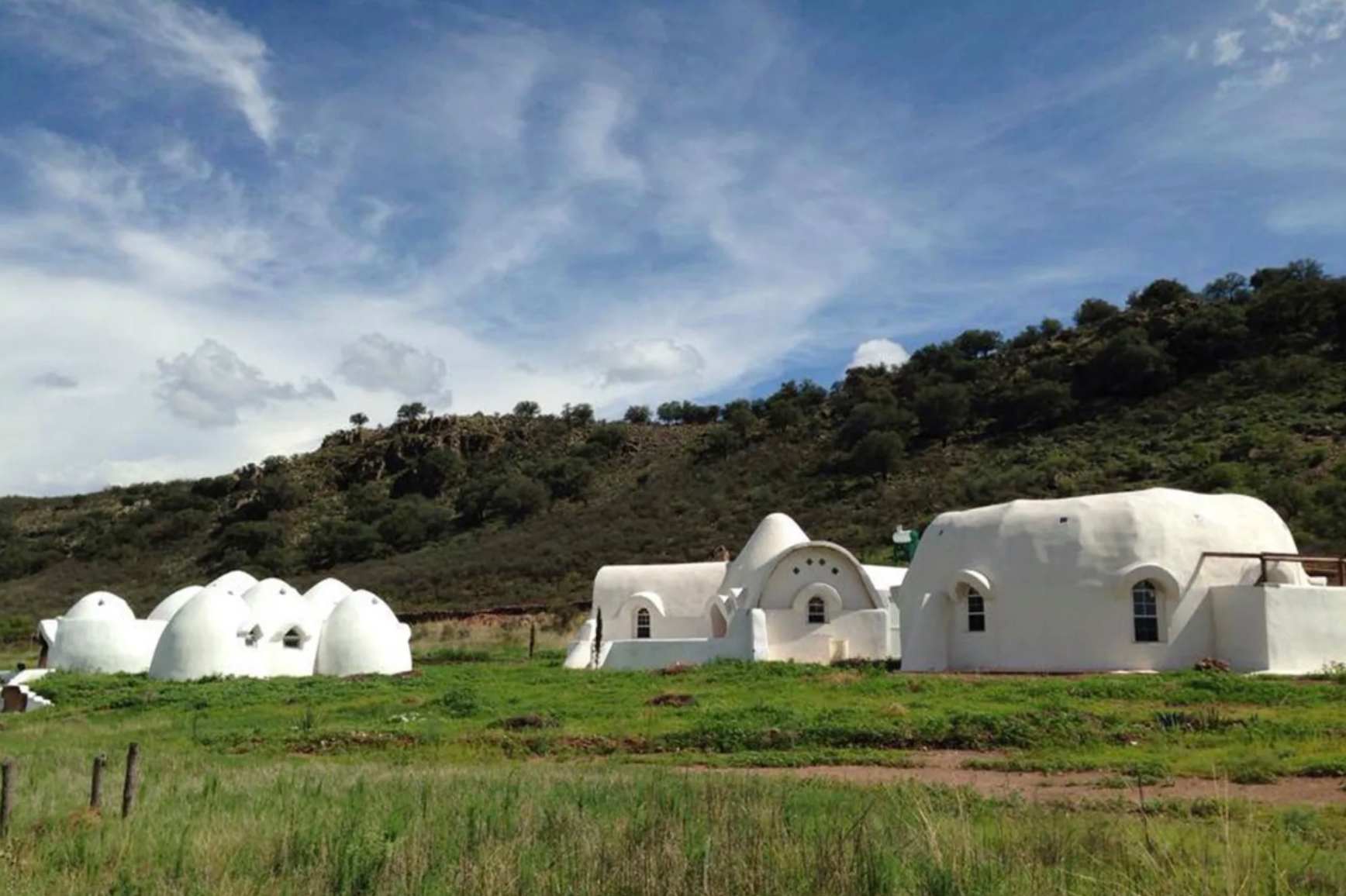

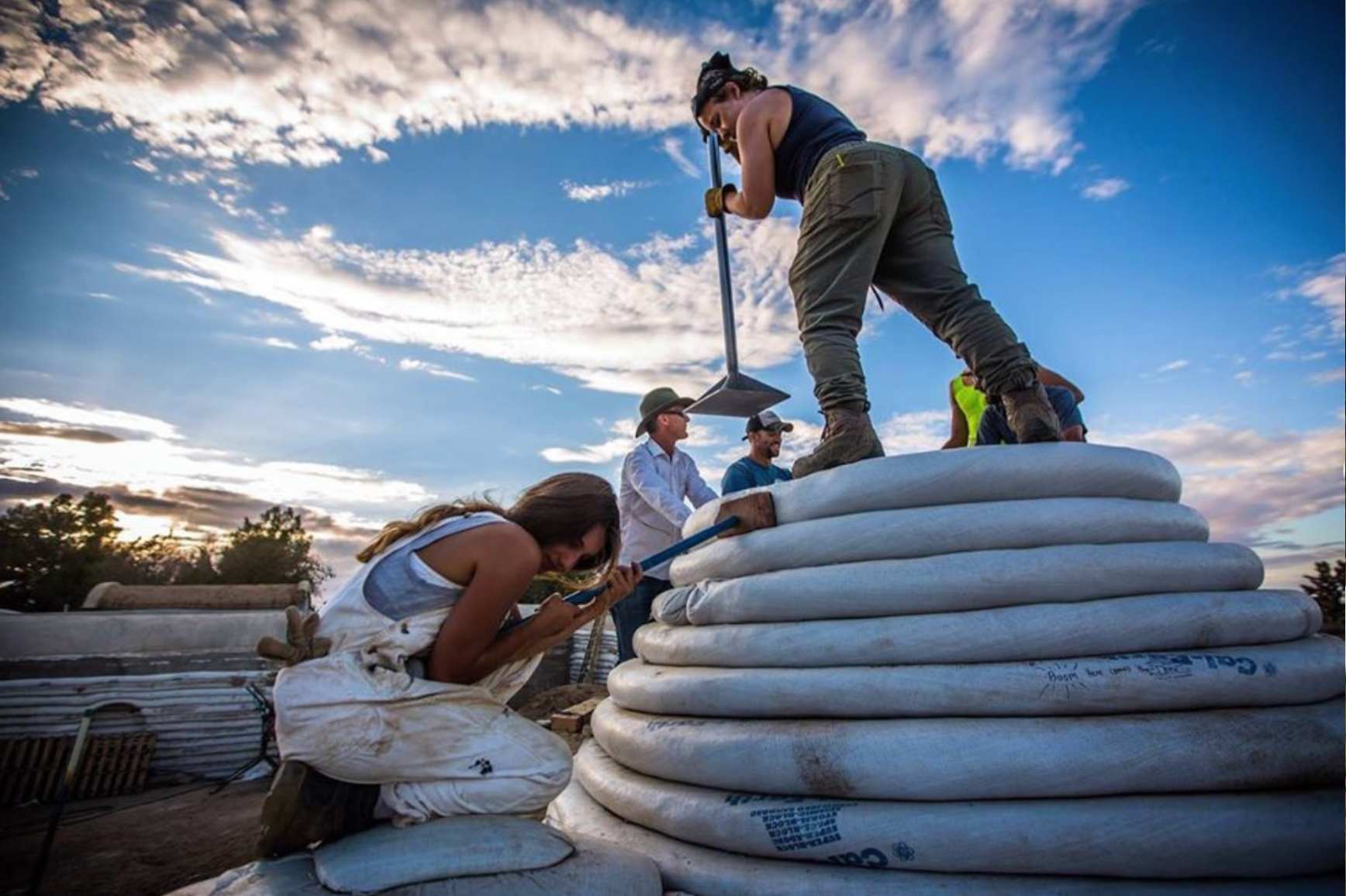


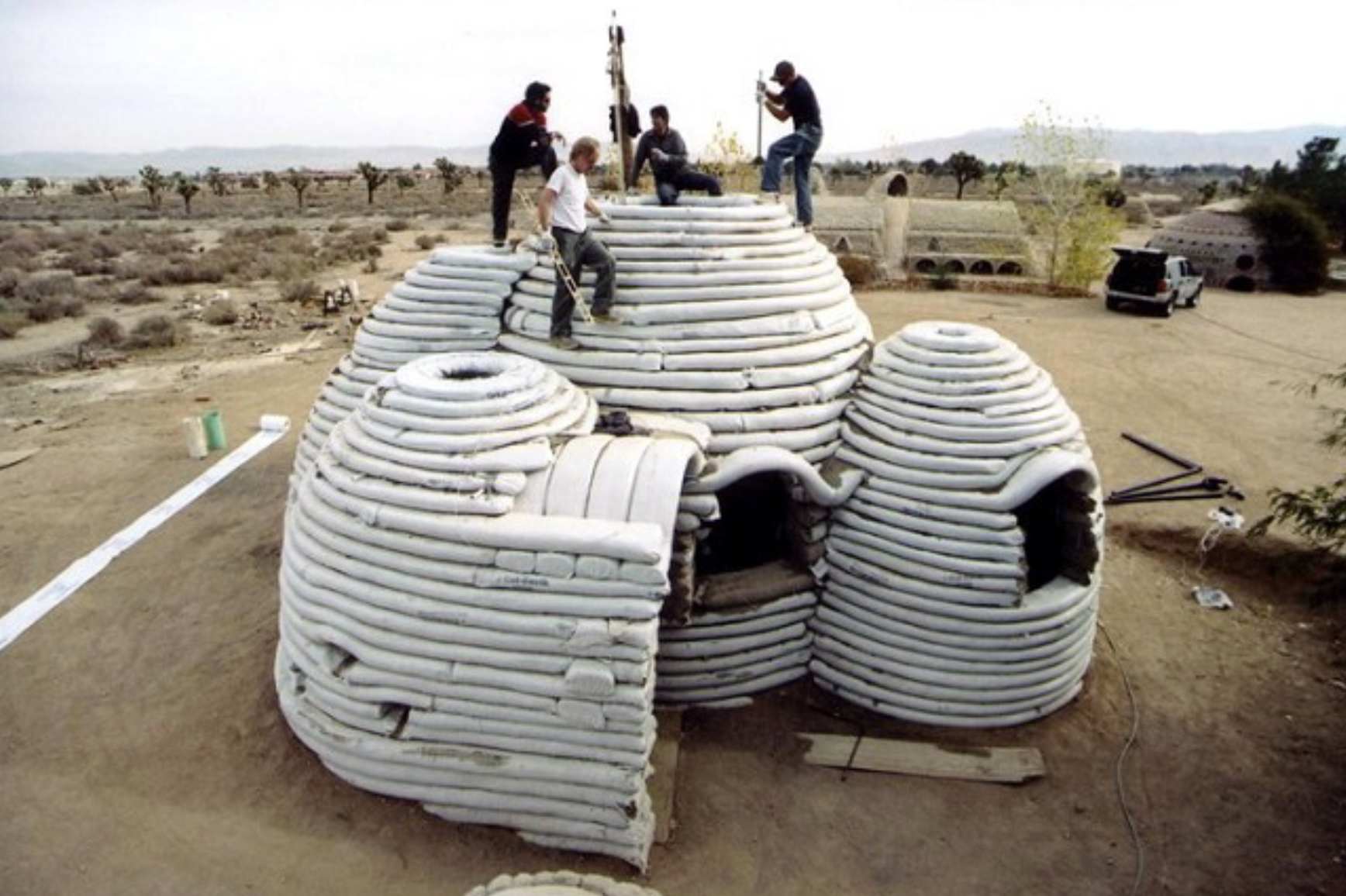


Why earthbag domes are climate-change proof
Earthbag building is cheap, climate-change proof and super sustainable

Because it is affordable, built with local materials, requires no energy, and is highly resilient, earthbag construction creates safe homes that stay cool, withstand extreme weather, and can be built almost anywhere, making it a truly climate-proof solution.
Because earthbag structures are built from local soil, they have a very low carbon footprint and remain resilient in extreme weather conditions. They are fire-resistant, termite-proof, and highly durable against floods, strong winds, and even earthquakes. Their rounded shapes and flexible structure help distribute stress, making them especially suitable for climate-vulnerable regions.
Because it is low-cost, locally built, energy-free, and extremely resilient, earthbag construction provides safe housing that stays cool, survives extreme weather, and works anywhere, making it the ultimate climate-proof solution.
By using natural materials and straightforward construction techniques, earthbag structures can be built quickly, cost-effectively, and with minimal environmental impact.
Learn more about earthbag building in this movie
How we harvest the rain
Gathering water without touching ground water levels
Our mission is to develop a new way of (aquaponics-based) farming in the village Kartong, in the Gambia. By developing a huge rainharvester we will make sure that we gather enough water, without touching groundwater levels.
We designed a very large rain harvester (the size of half a football field) to collect as much rainwater as possible during the rainy season. The harvested water is stored in large water tanks, which supply the project with sufficient water throughout the year.

This innovative system provides a sustainable way to generate water without depleting the local ground water levels. This step is vital if we want to apply aqua/sandponics farming on a larger scale in the village kartong.

For small-scale farmers in West Africa, Black Soldier Fly (BSF) farming is a true game-changer. It offers a simple, low-cost, and natural solution to three of their biggest hurdles: expensive animal feed, waste management, and depleted soil.
The “farm of the future” is one designed specifically for the communities that need it most. Traditionally, fish feed is the highest expense for a farmer, but by establishing a BSF unit, we can produce enough larvae to feed an entire pond for free. A single small building is enough to produce thousands of larvae every day.
Beyond self-sufficiency, BSF farming is a powerful tool for boosting income. The larvae are in high demand by local poultry and fish farmers, turning a simple waste-management system into a profitable business. It isn’t just about growing food; it’s about growing independence.
This was the final missing link in our project. By establishing a Black Soldier Fly (BSF) farm, we have eliminated our dependency on expensive, imported fish feed.
Learn more about Soldier Fly Farming in this movie

This isn’t just a cost-effective alternative; it is a way to produce a genuine ‘superfood’ for our fish. These larvae provide a natural, nutrient-dense diet packed with all the protein, vitamins, and minerals essential for healthy growth. We’ve replaced a financial burden with a sustainable, high-quality resource.